Showing posts with label astrophysics. Show all posts

Sunday, April 13, 2008

April 13, 2029

Twenty one years from today, we'll know for sure if 99942 Apophis—a meteor a quarter of a kilometer wide—is going to collide with Earth in 2036.

To paraphrase the above article, if 99942 Apophis hits Earth, it would release more than 100,000 times the energy of the Hiroshima explosion with a blast affecting thousands of square kilometers: everyone on Earth would see the dust released into the atmosphere. (I actually wrote about Apophis some time ago.)

Sadly, we cannot wait until 2028 to act. If we did, it would already be too late. To design and test the necessary equipment to deflect an asteroid takes decades. And this should be a global mission because the potential consequences would affect everyone on Earth. Most scientists are waiting until 2013 to observe Apophis' pass and collect further data on its trajectory. After that, they'll know a lot more.

Below is the "path of risk" of the meteor's possible impact, which would mean 10 million deaths in Central and South America alone, not including the gargantuan tsunamis sure to hit North America's West Coast:


By 2029, Apophis will pass so close to Earth as to be visible to the naked eye. In fact, it will even pass beneath our geosynchronous satellites. If we're lucky, Apophis will miss a 600 square meter "keyhole"—if it passes through that keyhole, Earth's gravitational pull would alter Apophis' trajectory enough to swing back and hit Earth eight years later.

And if luck has anything to do with it, or if you're superstitious at all, you really don't want to know which day of the week April 13th, 2029 is.

Thursday, September 13, 2007

RECOMMENDATION: Voyage to the Planets

I can't remember now how I first heard about Voyage to the Planets, a two part documentary about space travel, but it's one of the most educational and compelling I've ever seen. Made by the BBC—the best documentary filmmakers in the world—they pose the question, What would happen if mankind were ready to make its next great venture to the stars? The result is a 2 episode faux documentary, a future history of astronauts on one long "grand tour" of our solar system: Venus, Mars, Jupiter, Io, Europa, Saturn... in real life, such a voyage would never be attempted, but it is a clever construct to hook the audience, and it works.

Five astronauts embark on a six year voyage collecting samples from planets, facing hazards at every turn. It's crazy. It's the kind of shit you dreamt about when you were a kid. It is, in fact, the real Star Trek.

What also makes it really appealing to me is that Zoë, my 5 month old daughter, is among the generation who will explore the stars as described in this program. If the earliest launch for an unmanned probe to Europa is 2015 (when Zoë will be 8), then a manned launch to Europa is sure to follow 20-25 years later, which puts her at 28-32, exactly the right age range. It's not that I even want Zoë to be an astronaut, but it's exciting to feel how tangible that possibility is. What mysteries will they uncover in the last great adventure in human history?

The program employs another tactic very effectively: they take pains to get you to care about the astronauts from the very beginning. Like any documentary, you are documenting the explorers as much as you are what the explorers are exploring. You want to know who they are, how they get along, what their whimsies and foibles are. Once you care about these people, you care what happens to them. My wife didn't think she'd like this documentary, but every time the astronauts suited up, she was stressed out for them. Given the range of hazards they face on their voyage, there's no shortage of entertainment watching them insinuate their way to safety.

And did I forget to mention that one of the astronauts was named Zoë?

Friday, February 02, 2007

Type 0.7

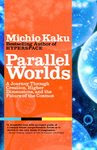
I'm shaking my head in bewilderment and handing you a book, open to page 307... trust me, you have to read this:

To understand the technology of civilizations thousands to millions of years ahead of ours, physicists sometimes classify civilizations depending on their consumption of energy and the laws of thermodynamics. When scanning the heavens for intelligent life, physicists do not look for little green men but for civilizations with the energy output of type I, II, and III civilizations. The ranking was introduced by Russian physicist Nikolai Kardashev in the 1960s for classifying the radio signals from possible civilizations in outer space. Each civilization type emits a characteristic form of radiation that can be measured and catalogued.

A type I civilization has harnessed planetary forms of energy. Their energy consumption can be precisely measured: by definition, hey are able to utilize the entire amount of solar energy striking their planet, or 1016 watts. With this planetary energy, they might control or modify the weather, change the course or hurricanes, or build cities on the ocean. Such civilizations are truly masters of their planet and have created a planetary civilization.

A type II civilization has exhausted the power of a single planet and has harnessed the power of an entire star, or approximately 1026 watts. They are able to consume the entire energy output of their star and might conceivably control solar flares and ignite other stars.

A type III civilization has exhausted the power of a single solar system and has colonized large portions of its home galaxy. Such a civilization is able to utilize energy from 10 billion stars, or approximately 1036 watts.

Each type of civilization differs from the next lower type by a factor of 10 billion. Hence a Type III civilization, harnessing the power of billions of star systems, can use 10 billion times the energy output of a type II civilization, which in turn harnesses 10 billion times the output of a type I civilization. Assuming a civilization grows at a modest rate of 2 to 3 percent in its energy output per year... we can estimate that our current civilization is approximately 100 to 200 years from attaining type I status. It will take roughly 1,000 to 5,000 years to achieve type II status and 100,000 to 1,000,000 years to achieve type III status....

To describe our present day civilization, astronomer Carl Sagan advocated creating finer gradations between civilization types. Type I, II, and III civilizations, we have seen, generate a total energy output of roughly 1016, 1026, and 1026 watts, respectively. Sagan introduced a type I.1 civilization, which generates 1017 watts of power, a type I.2 civilization, which generates 1018 watts of power, and so on. By dividing each type into ten smaller subtypes, we can begin to classify our own civilization. On this scale, our present civilization is more like a type 0.7—within striking distance of being truly planetary....

But the transition from type O to type I is also the most perilous, because we still demonstrate the savagery that typified our rise from the forest. In some sense, the advancement of our civilizations is a race against time. On one hand, the march toward a type I planetary civilization may promise us an era of unparalleled peace and prosperity. On the other hand, the forces of entropy (the greenhouse effect, pollution, nuclear war, fundamentalism, disease) may yet tear us apart. Sir Martin Rees sees these threats, as well as those due to terrorism, bioengineered germs, and other technological nightmares, as some of the greatest challenges facing humanity. It is sobering that he gives us only a fifty-fifty chance of successfully negotiating this challenge.

I could include the bit about type IV civilizations, but isn't your brain already hurting?