Showing posts with label global_warming. Show all posts

Tuesday, June 17, 2008

Well done, GM

Today Honda rolled out a zero emissions vehicle:

Honda's new zero-emission, hydrogen fuel cell car rolled off a Japanese production line Monday and is headed to southern California, where Hollywood is already abuzz over the latest splash in green motoring.

The FCX Clarity, which runs on hydrogen and electricity, emits only water and none of the gases believed to induce global warming. It is also two times more energy efficient than a gas-electric hybrid and three times that of a standard gasoline-powered car, the company says.

Honda expects to lease out a "few dozen" units this year and about 200 units over three years. In California, a three-year lease will run $600 a month, which includes maintenance and collision coverage. Link.

This strikes me as bitterly ironic since it was General Motors' EV1—the first legitimate zero emissions vehicle made in America—was decommissioned and shredded in 2003 because GM claimed the EV1's would never be profitable and it was "cheaper to sue the State of California to roll back clean vehicle regulations than it was to build electric vehicles." You can watch the tragic tale in the superb documentary, Who Killed the Electric Car?

Amazingly, it was the EV1's unexpected success which scared the Japanese into thinking they would lose an edge in the automobile wars... so the Japanese designed the first hybrid cars. So, okay, Americans ended up buying Japanese-made hybrids instead of American hybrids. We snoozed, we lost.

But we had a second chance to get it right—because hybrids still run on gas. We had the chance to resurrect and redesign a zero emissions vehicle using no gas at all. It is, in fact, what more and more American consumers have been crying out for.

And now the Japanese have beat us. Again.

So well done, GM. Thanks for shredding all your EV1's. That was really, really smart.

Wednesday, May 14, 2008

Attention Bush Supporters and/or Global Warming Doubters

Read this yesterday:

[President Bush] said more is known about global warming than when he first took office in 2001. Asked if it was real, Bush said, "Yes, it is real, sure is." Link.

Bush is the champion of many on the evangelical right, who also feel global warming is nonsense. So when President Bush—in theory, the most well informed man on the planet, but whose track record for obstinancy is Guinness-worthy—reverses his position on something as major as global warming, you would have to imagine it took a gargantuan stack of evidence to change his mind.

Again, I ask you: now that an oil man like President Bush has admitted his former position on global warming was wrong, how can anyone comfortably refute that?

Friday, October 12, 2007

On Monday: Blog Action Day for the environment

Saw this on Oopsie Daisy today:

This Monday, October 15th is Blog Action Day. Blog Action Day is an initiative for bloggers to unite and put a single important issue out there in the "blogosphere" (worst word ever) and get people thinking and taking about the issue. This year's issue? You guessed it. The environment. Participating is simple. On Monday, blog as you normally would, but keep the environment in mind. You can read more about it on the Blog Action Day website. Go forth and do good things!

So watch this space on Monday for a blog post about the environment.

And it promises to be a good one.

Friday, March 02, 2007

If you scoff at global warming...

When Al Gore's An Inconvenient Truth won Best Documentary at The 79th Academy Awards this year, I could have told you what my Christian Republican friends were already thinking: "Hollywood is so liberal."

It's too bad such an important message can be so easily dismissed because of partisan politics. In fact, it's damned near tragic, in the ancient Greek meaning of the word.

So for anyone who thinks global warming is still fiction, consider this news clipping from January 31, 2007:

The UN Intergovernmental Panel on Climate Change is due to release a report in Paris on Friday entitled Climate Change 2007 in which 2,500 scientists from 130 countries unequivocally state that the current trend towards potentially catastrophic global warming has been induced by human activity, which began with the dramatic increase in fossil fuel use during the Industrial Revolution of the mid-19th century....

The report is not without its critics in the scientific community. One senior British climate expert quoted in The Observer warned that the report’s predictions are relatively rosy, given its painstaking consensus process: “The really chilling thing about the IPCC report is that it is the work of several thousand climate experts who have widely differing views about how greenhouse gases will have their effect. Each paragraph of this report was therefore argued over and scrutinized intensely. Only points that were considered indisputable survived this process. This is a very conservative document—that's what makes it so scary.” —Source

I don't want global warming to be true because my lifestyle would have to change and my country, among others, would have been responsible for bringing about this ensuing disaster. But it looks like it is true. I could be wrong, but in the worst-case scenario, I can afford to be wrong.

The problem is that we can't afford to let the opponents against global warming be wrong... there's just too much at stake.

This is no time for polarization and petty squabbling—this issue affects everyone on the planet. The consensus of 2500 scientists across 130 countries says we're responsible for global warming, so our responsibility is to take them seriously, regardless of our political persuasion.

What can you do? Start by having an open mind and informing yourself—watch An Inconvenient Truth.

Wednesday, February 07, 2007

Global Warming?

I'm not a huge fan of dogmatic people. In fact, I hate proselytizers who blindly bulldoze anyone who opposes them... it's hateful and self-centered and unfair. Of course, I've been guilty of it myself on occasion, but I've tried to be introspective and keep an open mind. The problem with having a truly open mind in the pursuit of Truth is that your fundamental belief system can be radically undermined at any time.

Recently, the global warming debate has been heating up (sorry, bad one) and I've had to reexamine what I think about it all. I remember hearing a scientist say years ago that one volcanic eruption is thousands of times more harmful to the ozone layer than humans burning fossil fuels. It seemed to make sense at the time and I clung to that belief for many years. Besides, how could we puny humans change something so vast as the Earth?

And then I saw Al Gore's An Inconvenient Truth. I'm not saying I'm totally convinced—even experts can disagree, right?—but the data Gore lays out is compelling. He explores many different aspects of the debate, and each section convincingly points to two conclusions: (1) global warming exists and (2) humans are causing it.

I didn't want to believe it. I still don't want to believe it.... but after looking at the data he presents, I can't honestly say it's all a lie originating from dogmatic tomfoolery. Gore may be onto something, and even if there's a very small chance he's right, it would be negligent not to at least consider it very carefully.

The most influential piece in the film is a 6 minute clip about CO2 emissions and I was ecstatic to find it on You Tube. If you're still on the fence about whether humans are causing global warming, watch this clip and I bet it will make you think twice:

Friday, February 02, 2007

Type 0.7

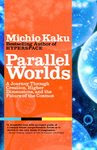
I'm shaking my head in bewilderment and handing you a book, open to page 307... trust me, you have to read this:

To understand the technology of civilizations thousands to millions of years ahead of ours, physicists sometimes classify civilizations depending on their consumption of energy and the laws of thermodynamics. When scanning the heavens for intelligent life, physicists do not look for little green men but for civilizations with the energy output of type I, II, and III civilizations. The ranking was introduced by Russian physicist Nikolai Kardashev in the 1960s for classifying the radio signals from possible civilizations in outer space. Each civilization type emits a characteristic form of radiation that can be measured and catalogued.

A type I civilization has harnessed planetary forms of energy. Their energy consumption can be precisely measured: by definition, hey are able to utilize the entire amount of solar energy striking their planet, or 1016 watts. With this planetary energy, they might control or modify the weather, change the course or hurricanes, or build cities on the ocean. Such civilizations are truly masters of their planet and have created a planetary civilization.

A type II civilization has exhausted the power of a single planet and has harnessed the power of an entire star, or approximately 1026 watts. They are able to consume the entire energy output of their star and might conceivably control solar flares and ignite other stars.

A type III civilization has exhausted the power of a single solar system and has colonized large portions of its home galaxy. Such a civilization is able to utilize energy from 10 billion stars, or approximately 1036 watts.

Each type of civilization differs from the next lower type by a factor of 10 billion. Hence a Type III civilization, harnessing the power of billions of star systems, can use 10 billion times the energy output of a type II civilization, which in turn harnesses 10 billion times the output of a type I civilization. Assuming a civilization grows at a modest rate of 2 to 3 percent in its energy output per year... we can estimate that our current civilization is approximately 100 to 200 years from attaining type I status. It will take roughly 1,000 to 5,000 years to achieve type II status and 100,000 to 1,000,000 years to achieve type III status....

To describe our present day civilization, astronomer Carl Sagan advocated creating finer gradations between civilization types. Type I, II, and III civilizations, we have seen, generate a total energy output of roughly 1016, 1026, and 1026 watts, respectively. Sagan introduced a type I.1 civilization, which generates 1017 watts of power, a type I.2 civilization, which generates 1018 watts of power, and so on. By dividing each type into ten smaller subtypes, we can begin to classify our own civilization. On this scale, our present civilization is more like a type 0.7—within striking distance of being truly planetary....

But the transition from type O to type I is also the most perilous, because we still demonstrate the savagery that typified our rise from the forest. In some sense, the advancement of our civilizations is a race against time. On one hand, the march toward a type I planetary civilization may promise us an era of unparalleled peace and prosperity. On the other hand, the forces of entropy (the greenhouse effect, pollution, nuclear war, fundamentalism, disease) may yet tear us apart. Sir Martin Rees sees these threats, as well as those due to terrorism, bioengineered germs, and other technological nightmares, as some of the greatest challenges facing humanity. It is sobering that he gives us only a fifty-fifty chance of successfully negotiating this challenge.

I could include the bit about type IV civilizations, but isn't your brain already hurting?